Home Server & NAS
A homelab I use every day
My NAS is both a home server and a place to turn personal projects into applications I actually use. It runs my websites, media services, development tools and supporting infrastructure. I manage the environment with Docker Compose on a UGREEN DXP4800 Plus, keeping application code, configuration and persistent data separate.
One place to find everything
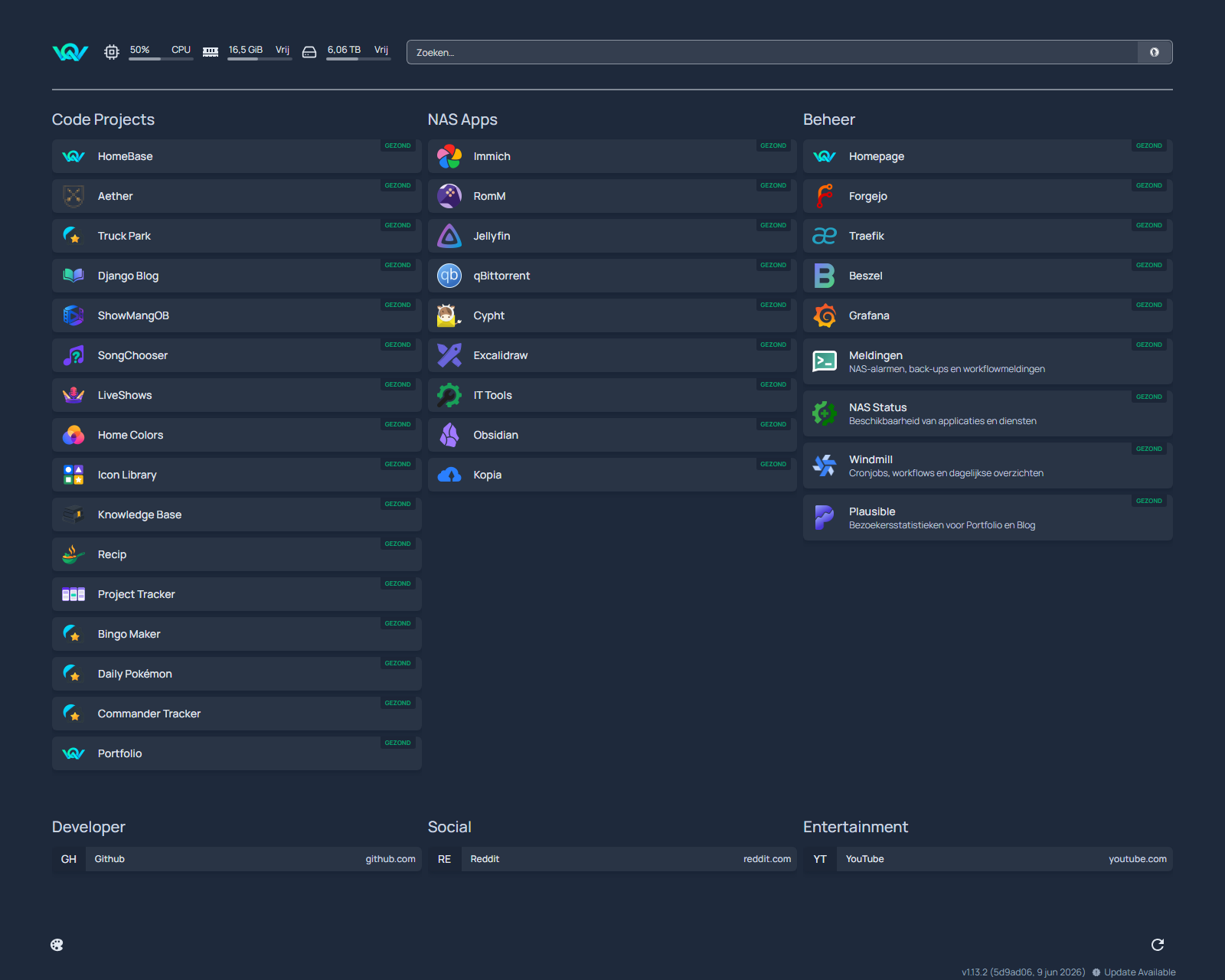
Homepage gives me a compact overview of my applications and their status. My own HomeBase dashboard adds editable shortcuts and a shared search across applications, icons, recipes, media and documentation. Icon Library supplies the artwork used across the dashboards, while Meilisearch brings the searchable sources together.
From code to a running application
Forgejo hosts my repositories, build workflows and container images. The NAS runs projects such as ShowMango, SongChooser, LiveShows, Recip, Project Tracker, Bingo Maker and My Commander Tracker, alongside this portfolio and my Django blog. Each application has its own containers and persistent storage. Healthchecks, bounded logs and restart policies make the deployments easier to maintain.
Media, notes and useful tools
The same environment hosts Immich for photos and videos, Jellyfin for streaming, RomM for my game library, Obsidian for notes and Cypht for webmail. Excalidraw and IT Tools provide practical tools without needing a separate hosted account. Private services are reached through the local network or Tailscale; public websites use their existing domains through Cloudflare Tunnel.
Monitoring and automation
Prometheus collects host, application and database metrics. Grafana brings capacity, storage, availability and backup status together, with Beszel for container resources and Gatus for service checks. Alertmanager and ntfy deliver notifications, while Windmill runs scheduled workflows and daily summaries. Plausible records pageviews for the portfolio and blog.
Storage and recovery
Four hard drives in RAID5 and a mirrored NVMe cache form the storage base. Databases and uploads stay in persistent volumes or bind mounts, outside replaceable containers. Kopia writes encrypted backups of the configured sources to USB storage, supported by database exports, scheduled restore checks and monitoring of backup age and failures. RAID keeps storage available when a drive fails; separate backups provide a recovery path for the data they cover.
The ecosystem
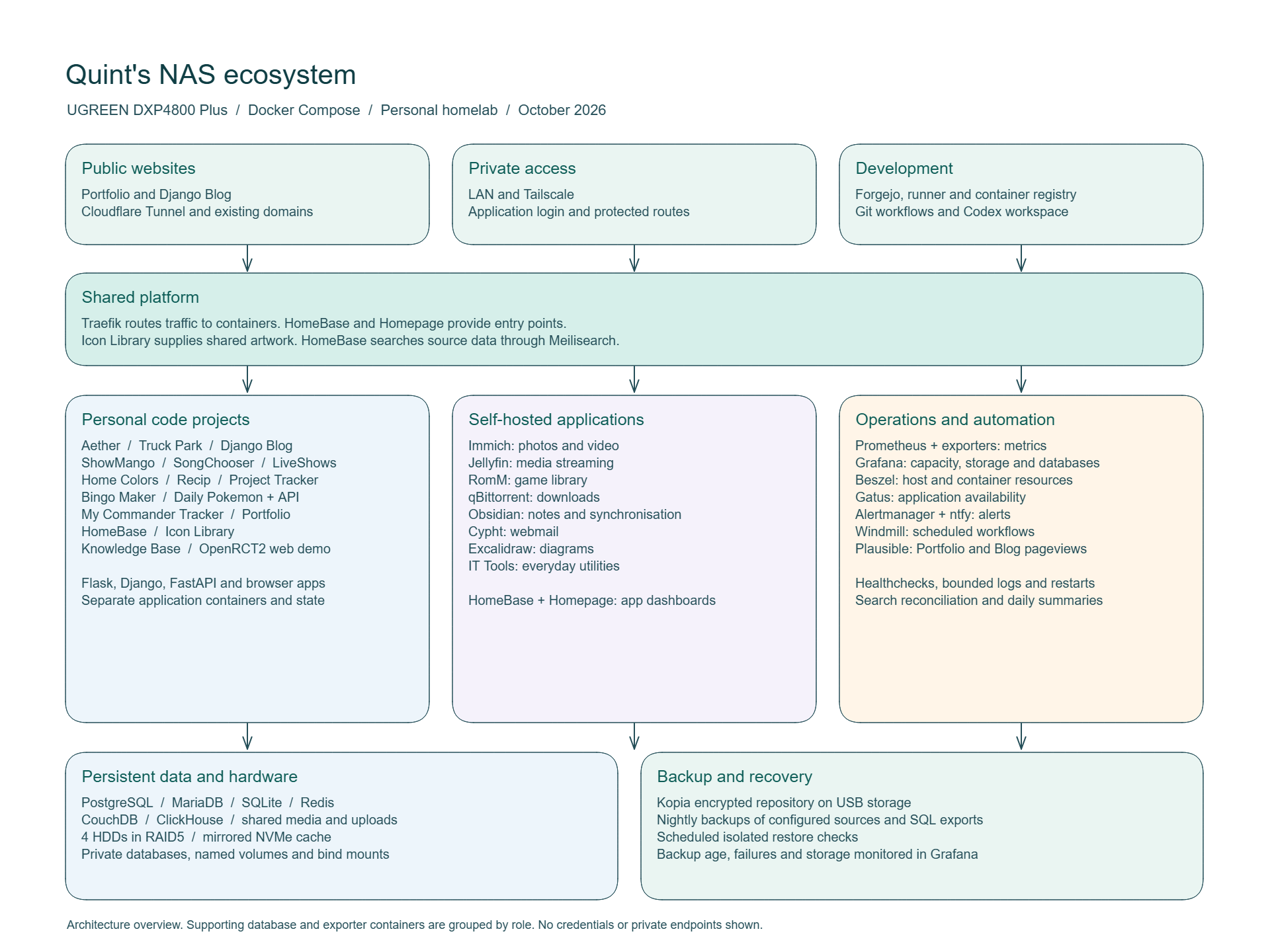
The images show the current Homepage dashboard and an architecture overview made in Excalidraw. The diagram groups the applications, shared services, monitoring and storage by role, showing how the homelab fits together without exposing credentials or private endpoints.
Monthly ecosystem archive
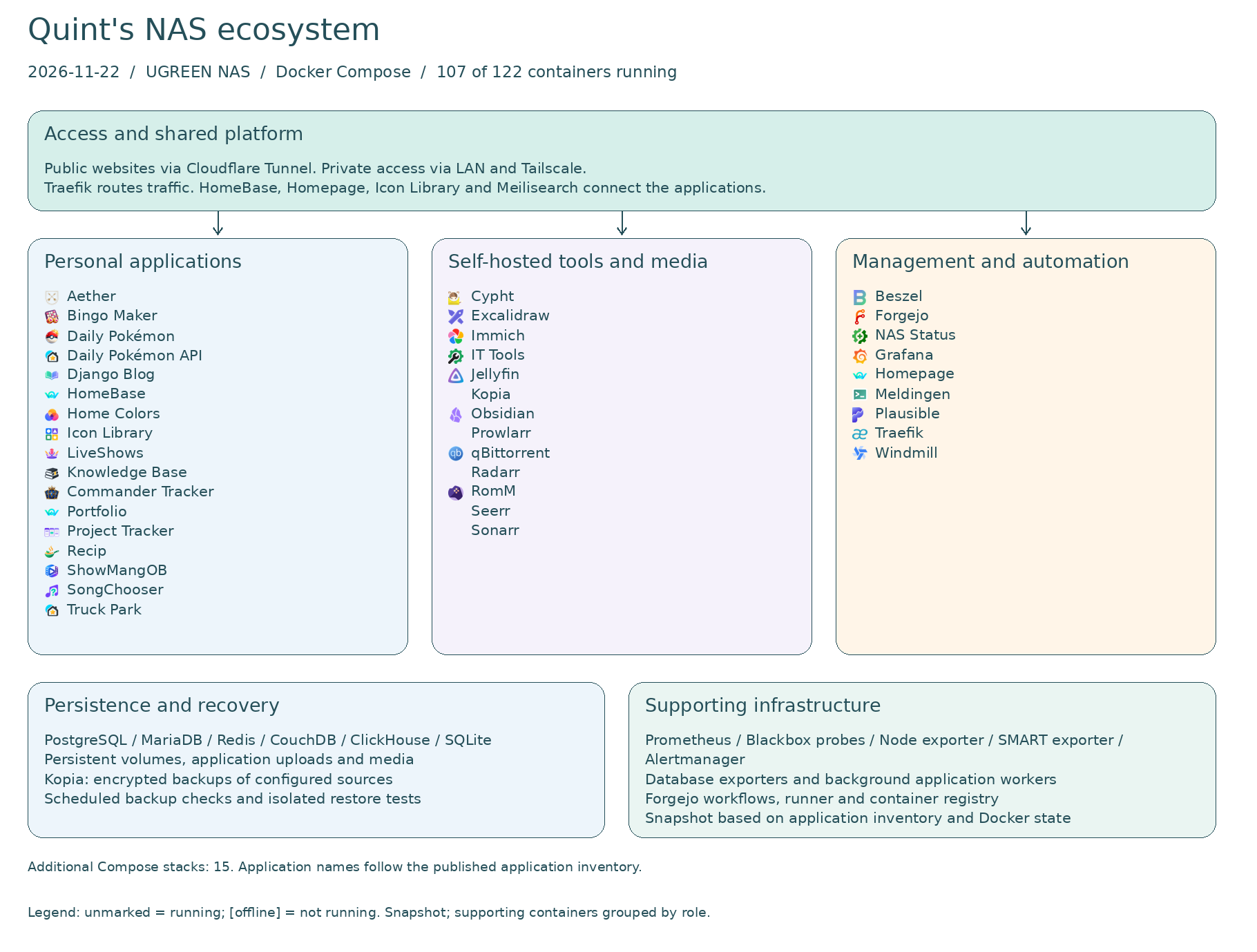
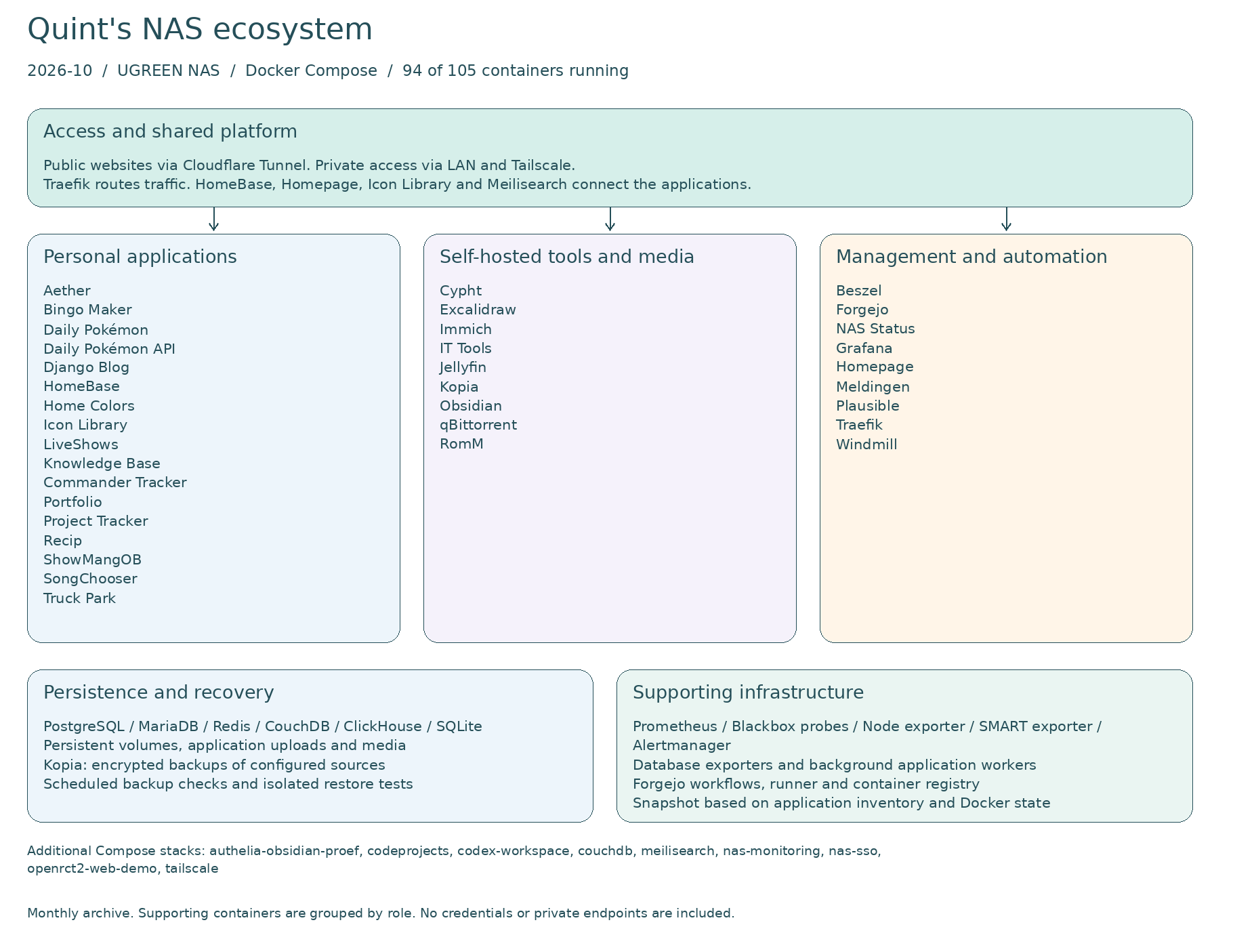
- 2026-10 (Baseline): PNG · Excalidraw · Changes
Initial diagram: PNG · Excalidraw
Een homelab dat ik dagelijks gebruik
Mijn NAS is tegelijk een thuisserver en een plek waar persoonlijke projecten uitgroeien tot applicaties die ik echt gebruik. Er draaien websites, mediadiensten, ontwikkeltools en de infrastructuur die alles bij elkaar brengt. Ik beheer de omgeving met Docker Compose op een UGREEN DXP4800 Plus en houd applicatiecode, configuratie en blijvende data gescheiden.
Alles op één plek terugvinden
Homepage geeft me een compact overzicht van mijn applicaties en hun status. Mijn eigen HomeBase-dashboard voegt bewerkbare snelkoppelingen toe en een gezamenlijke zoekfunctie voor applicaties, iconen, recepten, media en documentatie. Icon Library levert het beeldmateriaal voor de dashboards. Meilisearch brengt de doorzoekbare bronnen samen.
Van code naar een draaiende applicatie
Forgejo beheert mijn repositories, buildworkflows en containerimages. Op de NAS draaien onder andere ShowMango, SongChooser, LiveShows, Recip, Project Tracker, Bingo Maker en My Commander Tracker, naast dit portfolio en mijn Django-blog. Iedere applicatie heeft eigen containers en blijvende opslag. Healthchecks, begrensde logs en herstartbeleid maken de uitrol beter beheersbaar.
Media, notities en handige tools
Dezelfde omgeving host Immich voor foto's en video's, Jellyfin voor streaming, RomM voor mijn gamebibliotheek, Obsidian voor notities en Cypht voor webmail. Excalidraw en IT Tools bieden praktische hulpmiddelen zonder een apart gehost account. Privédiensten bereik ik via het lokale netwerk of Tailscale. Publieke websites gebruiken hun bestaande domeinen via Cloudflare Tunnel.
Monitoring en automatisering
Prometheus verzamelt metingen van de host, applicaties en databases. Grafana brengt capaciteit, opslag, beschikbaarheid en back-upstatus samen, met Beszel voor containerresources en Gatus voor bereikbaarheidscontroles. Alertmanager en ntfy verzorgen meldingen. Windmill voert geplande workflows en dagelijkse overzichten uit. Plausible registreert paginaweergaven voor het portfolio en de blog.
Opslag en herstel
Vier harde schijven in RAID5 en een gespiegelde NVMe-cache vormen de opslagbasis. Databases en uploads blijven in vaste volumes of bind mounts staan, buiten de vervangbare containers. Kopia schrijft versleutelde back-ups van de ingestelde bronnen naar USB-opslag, aangevuld met database-exports, geplande herstelcontroles en bewaking van de leeftijd en fouten van back-ups. RAID houdt de opslag beschikbaar bij uitval van een schijf. Afzonderlijke back-ups bieden een herstelmogelijkheid voor de gegevens die erin zijn opgenomen.
Het ecosysteem
De afbeeldingen tonen het huidige Homepage-dashboard en een architectuuroverzicht dat ik in Excalidraw heb gemaakt. Het schema groepeert applicaties, gedeelde diensten, monitoring en opslag naar hun rol en laat zien hoe het homelab samenhangt, zonder inloggegevens of privé-eindpunten te tonen.
Maandelijks ecosysteemarchief
- 2026-10 (Baseline): PNG · Excalidraw · Wijzigingen
Eerste schema: PNG · Excalidraw